
Choosing social media platforms for businesses can easily start to feel like completing a checklist.
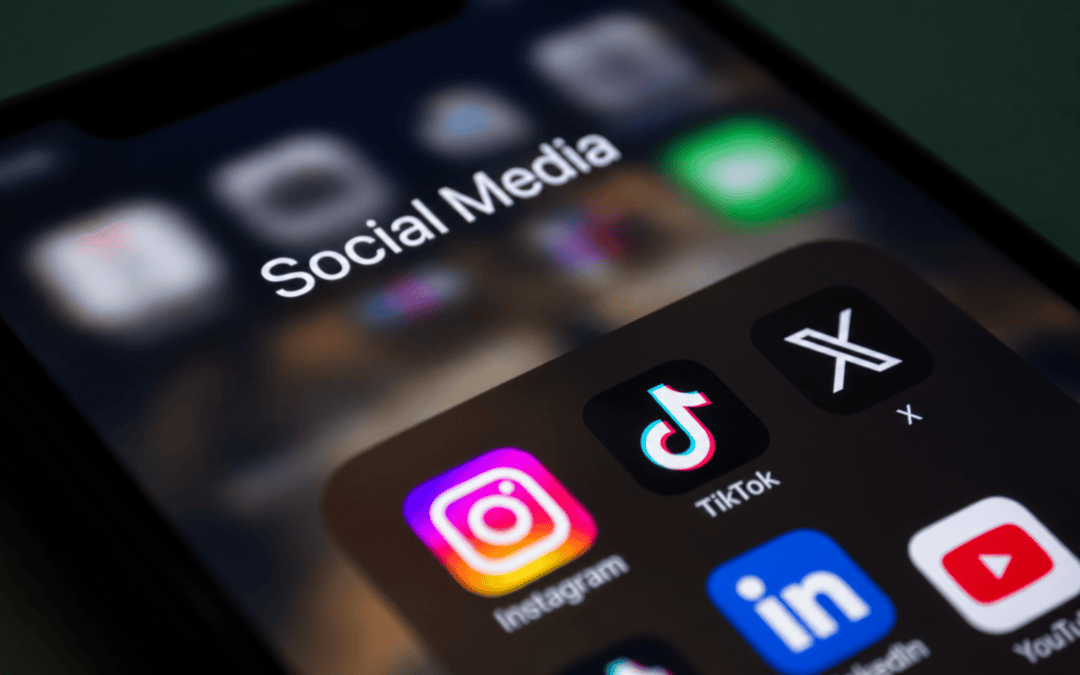
Instagram. TikTok. Facebook. LinkedIn. YouTube. Threads. Then another platform appears and suddenly brands are wondering whether they need an account there too.
The logic seems reasonable. If potential customers are using a platform, shouldn’t the business be there as well?
Not necessarily.
Being present everywhere can create the appearance of a strong digital presence, but every additional channel requires time, content, attention and a reason to exist. A business with five barely maintained accounts may ultimately have a weaker presence than one that understands exactly why it is active on two.
The question is not simply how many platforms a brand can manage.
It is whether the platforms it chooses actually help the brand communicate with the right people.
Why Being Everywhere Can Feel Like the Safe Choice
There is an understandable fear behind trying to maintain a presence everywhere.
If competitors are posting on TikTok, perhaps we should be there too.
If other businesses are building audiences on LinkedIn, are we falling behind?
If a new platform suddenly becomes popular, should the brand join before everyone else does?
That fear of missing out can turn social media into a checklist rather than a strategy.
Creating an account is easy. Maintaining it well is the difficult part.
Every active platform may require content planning, creative production, captions, scheduling, community management, reporting and ongoing decisions about what should happen next.
If the brand cannot give a channel enough attention to make it useful, simply having an account does not necessarily strengthen its digital presence.
There is a similar problem when brands chase visibility simply because something is popular. As we explored in When Every Brand Wants to Go Viral, Who Is Actually Listening?, attention can be valuable without automatically translating into stronger brand recognition or meaningful business results.
Platform popularity works in much the same way.
A large audience does not automatically mean it is your audience.
Choosing Social Media Platforms for Businesses Starts With the Audience
Before deciding where a brand should post, start with the people it actually wants to reach.
Instead of asking:
“Which platform is the most popular right now?”
Ask:
“Where does our audience spend time, and what are they doing when they are there?”
Those are very different questions.
People can use TikTok for entertainment, LinkedIn for professional insights, Instagram for discovery and YouTube when they want more detailed or longer-form content.
That does not mean everyone behaves exactly the same way. It means the context of each platform matters.
Singapore is also highly connected digitally. DataReportal’s Digital 2026: Singapore report estimates 5.33 million social media user identities in Singapore in late 2025, but its platform-level data also shows substantial differences between services and comes with important methodology caveats. That is another reason businesses should avoid assuming that one headline audience number tells them where their own customers are. DataReportal – Global Digital Insights
Before adding another platform, a business can ask:
- Is our target audience genuinely active there?
- What are they looking for when they use it?
- Does our brand have something appropriate to contribute?
- Can our team create suitable content consistently?
- What business or communication objective would the platform support?
- How will we know whether maintaining it is worthwhile?
The goal is not to identify one universally “best” platform.
It is to find the right fit between audience, content and purpose.

Different Platforms Encourage Different Types of Content
Choosing a platform also means choosing how the brand communicates.
A 20-second vertical video may feel completely natural on TikTok or Instagram Reels.
The same idea might need a more professional or explanatory angle on LinkedIn.
On YouTube, the topic could become a longer tutorial, interview or behind-the-scenes story.
The underlying message can remain the same, but the presentation may need to change.
This is particularly important for video. In Why Video Content Creation Is Essential for Modern Marketing Success, we looked at how video can support engagement, trust and wider marketing objectives. The next question is where that video belongs and how viewers on that particular platform expect to consume it. TMR Media’s site currently positions video creation as part of its broader content offering, including Reels, podcasts, promotional videos and event content.
That is why “we already made the content, so let’s upload it everywhere” is not always a platform strategy.
Sometimes it is simply distribution.
Repurposing Content Is Useful. Copying Everything Is Different.
None of this means businesses should create completely different campaigns for every channel.
That could become inefficient very quickly.
Repurposing is useful when the brand keeps the central idea but adapts the execution.
Imagine one campaign begins with a longer piece of video content.
A short highlight could become an Instagram Reel.
A strong insight from the same video could become a LinkedIn post.
Several useful points might turn into a carousel.
A longer edit could remain on YouTube.
The idea stays consistent, but the experience changes according to where the audience sees it.
This gives a brand something more valuable than identical posts appearing across five feeds.
It creates consistency without sameness.
More Social Media Platforms Mean More Resources
One of the easiest things to underestimate is how much work happens around the post itself.
Someone has to plan the content.
Someone needs to create or source the assets.
Captions may require editing.
Videos need production.
Comments and messages may need responses.
Results need reviewing.
Then the process begins again.
Adding one more platform therefore does not simply mean clicking another “Publish” button.
For a company with a large marketing department, handling several channels may be realistic.
For an SME where one person is managing strategy, design, content, reporting and several other responsibilities, the situation can look very different.
Spreading limited resources across too many channels can eventually reduce the quality and consistency of all of them.
This is also one of the considerations behind deciding whether content should remain fully in-house or receive outside support. Our article on Content Creation Agency Singapore vs In-House Team: Which Is Better for Business Growth? explores that wider resource question, including the trade-off between internal brand knowledge and additional creative or production capacity.
The same principle applies to platforms.
More is only better when the business has a reason and the capacity to manage more.
When Being on More Platforms Does Make Sense
A focused strategy does not mean a business should remain on one or two platforms forever.
Expansion can make sense.
A brand may serve several audience groups that naturally use different channels. It may develop enough content resources to adapt ideas efficiently. Different platforms might also play different roles across the customer journey.
For example, one channel could support discovery while another builds professional credibility.
Long-form content might live somewhere else.
Another platform could become useful for community engagement or customer communication.
In that situation, each platform has a job.
The business is not adding another channel because everyone else has one. It is expanding because the new platform adds something useful to the wider marketing ecosystem.
That distinction matters.
A Smaller but Stronger Presence Can Be More Valuable
There can be pressure to make a company look more established by putting its logo on every available platform.
But customers rarely decide whether a brand is credible by counting the number of social icons in its footer.
They experience the content in front of them.
For smaller businesses especially, concentrating on fewer platforms can create room to understand those channels properly.
The team can learn which topics people respond to.
It can test different formats.
It can identify what generates enquiries rather than merely likes.
It can recognise which messages audiences ignore and which ones encourage them to learn more.
Those lessons become much harder to spot when attention is scattered across too many channels.
This idea of fit over quantity applies beyond platforms too. In There Is No “Best” Social Media Agency in Singapore — Only the Best Fit for Your Brand, we discussed why the right marketing choice depends on a business’s objectives, requirements and long-term direction rather than simply choosing what appears biggest or most popular. The same thinking should guide platform selection.
The best channel is not automatically the one with the largest audience.
It is the one that makes sense for the business using it.

How Should a Business Decide Which Platforms to Prioritise?
A practical decision can begin with three areas.
1. Audience
Who is the business trying to reach?
Avoid choosing a platform simply because it has millions of users. Look at whether the specific customers the business wants are genuinely present and active there.
2. Content
What can the brand realistically create well?
A business with strong video capabilities may have different opportunities from a company whose strongest content comes from expertise, thought leadership or professional insights.
The right platform should suit both the audience and what the brand can sustain.
3. Objective
What is the platform supposed to achieve?
Awareness?
Website traffic?
Community?
Leads?
Employer branding?
Education?
Customer engagement?
A platform becomes much easier to evaluate once the business knows why it is using it.
Without that purpose, social media activity can quickly become posting simply because the content calendar says something needs to go out.
Social Media Is a Communication Channel, Not a Checklist
The right social media platforms for businesses are not necessarily the newest ones, the largest ones or the ones competitors happen to use.
They are the platforms where a brand has a useful reason to communicate.
For one business, that could mean Instagram and TikTok.
Another may find more value in LinkedIn and YouTube.
A company with several distinct customer groups could eventually benefit from a much wider mix.
None of those approaches is automatically better.
What matters is whether the audience is there, whether the content belongs there and whether the platform contributes to something the business is actually trying to achieve.
So perhaps the question should not be:
“How many platforms should our business be on?”
A better question is:
“Which platforms deserve our time, content and attention?”
A smaller but more intentional digital presence can often create far more value than being everywhere without a clear reason.
The goal is not to collect platforms.
It is to make the platforms you choose work for your brand.
Frequently Asked Questions About Social Media Platforms for Businesses
Does every business need to be on every social media platform?
No. Businesses should select platforms according to their audience, objectives, content capabilities and available resources. Maintaining several weak or inactive profiles does not automatically create a stronger digital presence.
How many social media platforms should a business use?
There is no ideal number that applies to every company. A smaller business may benefit from focusing on one or two channels first, while larger teams may have the capacity and strategic reason to maintain several. Quality and purpose matter more than the total number.
How do I know which social media platform is right for my business?
Start with your audience and marketing objective. Look at where your target customers spend time, how they use each platform and what type of content your business can produce consistently. The strongest option is usually the platform where those factors overlap.
Should businesses post the same content on every social media platform?
Businesses can reuse the same core idea, but the format should often change. A campaign may become a short video on one platform, a carousel on another and a more detailed discussion somewhere else. Repurposing preserves efficiency while still respecting how audiences use different channels.
Is it better for a small business to focus on fewer platforms?
Often, yes. Fewer platforms can allow a small team to invest more time in content quality, audience interaction and learning what actually works. Expansion can come later when the business has a clear reason and enough resources to support another channel.
When should a business add another social media platform?
Consider expanding when a relevant audience is active there, the platform supports a genuine business objective and the team can maintain it without weakening existing channels. A new platform should add a useful role rather than simply increase the number of accounts the business owns.
What matters more: being on more platforms or posting consistently?
Neither quantity nor consistency alone guarantees results. Businesses need consistency on the right platforms, supported by relevant content and clear objectives. Posting frequently in a channel that does not reach the right audience is unlikely to solve the underlying problem.